
Allen Parish Civil Docket Searches
The Allen Parish Clerk of Court civil department is where the work gets done. It handles civil suits and probates. It keeps the indexes and cost records. From there it files pleadings, documents, and exhibits, and it issues citations, writs, subpoenas, and trial notices. For searching at home, the official route is the Allen ClerkConnect records inquiry. Think of it as a parish layer over the Clerk's configured records. It is not a statewide trial-case portal, and it will not surface every lower-court file.
Numbers beat names. If the suit number appears on a petition, notice, minute entry, or calendar, use it exactly. Name searches still work. The live form lets you narrow by first name, suit kind, suit cause, attorney, or filing date when those choices appear. One caution applies. An index row is not the full civil record. Ask the Clerk directly for document images, certified copies, or anything missing online.
Each route serves one purpose. A civil suit, a succession, a calendar entry, a ClerkConnect result, and a certified-copy request all travel separate paths. A lower-court file does too. An Allen Parish docket search goes smoothly when you know the suit number, the division, and the filing type. It also helps to know whether the matter is public, restricted, or held in a lower court.
- Decide whether the matter is a 33rd JDC civil suit, succession, confidential filing, lower-court case, or federal case.
- Search the exact suit number first, then use name, cause, attorney, or date fields only as needed.
- Read all result pages and capture the suit number, filing date, cause, and any available detail link.
- Check the public court-event route and Docket A/B when the task is finding a future setting.
- Request the precise filing, minute, or certified record from the Allen Clerk when the index cannot answer the question.
Allen Parish ClerkConnect Civil Fields
Civil searching on ClerkConnect works differently from the criminal side. The screen offers Suit Number, Last Name, First Name, Suit Cause, and Attorney Name or Barroll#. A date-search service is there too. Suit Kind is a required dropdown, with an ALL option for most search types. The cause list changes depending on the suit kind you pick. The date fields appear only when they apply. Allen's full configured list of suit kinds and causes is not published in the template. Use whatever labels the live screen gives you. The Allen civil inquiry is the official page to consult.
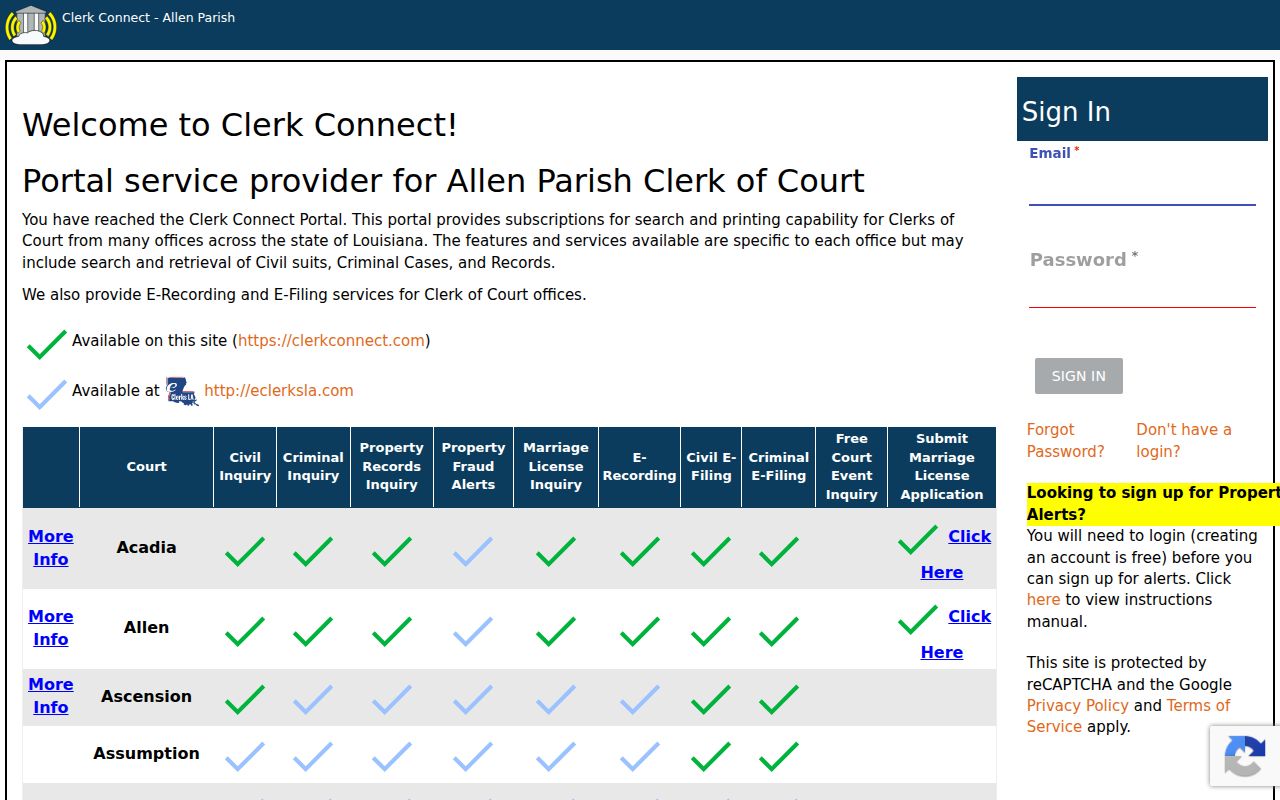
The inquiry also carries account, subscription, transaction-history, and payment controls. Those features are a reminder. A public search shell is not the same as unrestricted document access. Results may paginate at 15, 25, 50, 75, or 100 items. Each field narrows a different civil inquiry. The suit number, the suit kind, the suit cause, the date range, the attorney, and the result pages each play their own part.
Civil Dockets: What They Show
A row in the Allen Parish civil docket is just the index. It lists the suit number, plaintiff, defendant, and date filed. It may add a caption, a cause code, and a detail action. The full court record behind that row can hold pleadings, exhibits, service returns, orders, minutes, and cost activity. Access depends on the record itself. A party label names a role in the index. It does not tell you who won.
| Suit number | The key local identifier for an exact search; no public universal mask was located. |
|---|---|
| Caption | An optional public display field that does not change confidentiality rules. |
| Date filed | The date recorded for the suit, distinct from a hearing or decision date. |
| Cause | The portal category field, not necessarily the complete legal theory. |
| Detail or minute | Available case information that must be read with its stated access limit. |
The civil department describes the clerk services behind the civil docket.
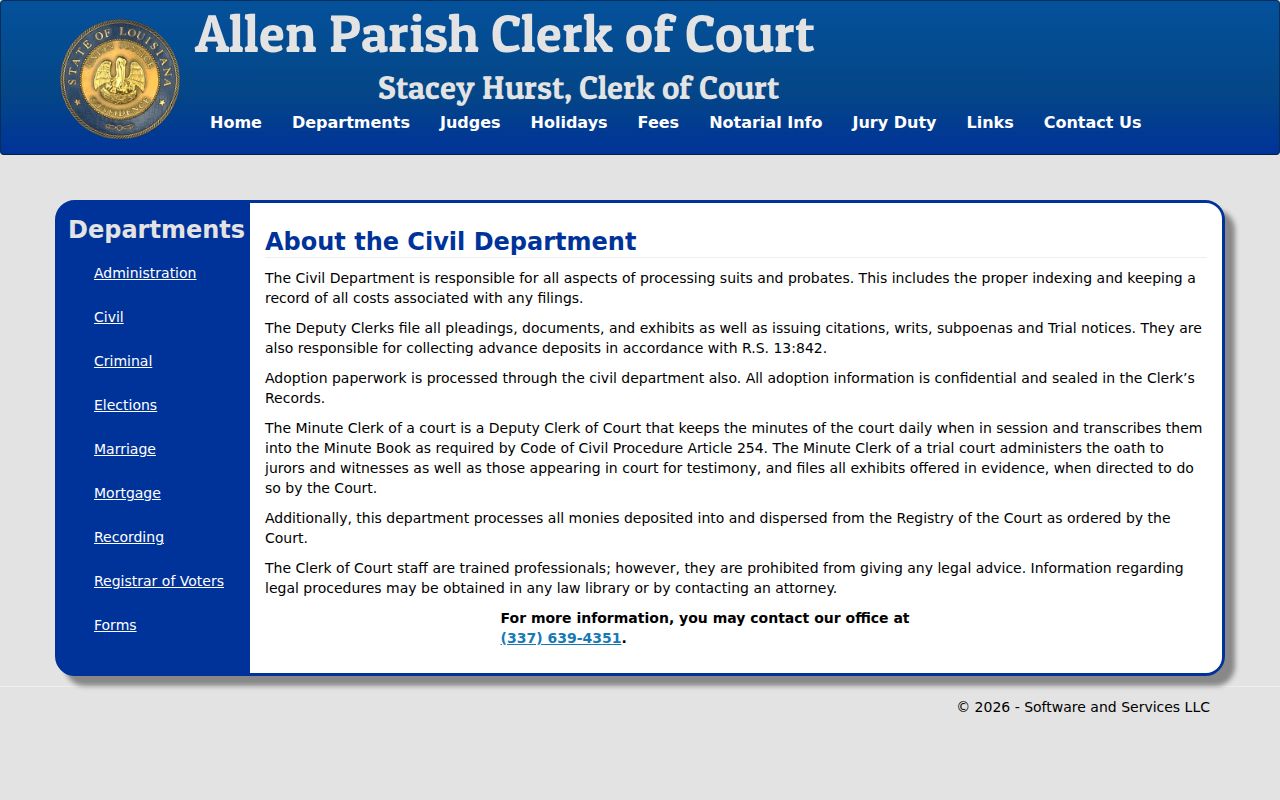
A civil docket entry packs a lot into a few fields. The suit number, the filing type, and the filing date are the three details worth pulling out first. They identify the case and let you ask for a copy by name. Copies come in more than one form. Say which you need: plain, certified, conformed, or file-stamped. And remember that each piece of an Allen Parish civil record tells its own story: the caption names the parties, the cause entry notes what was filed, the minute records what happened, and the filed document is the paper itself.
Allen Parish Civil Allotment
Qualifying civil pleadings are allotted at random before any judge sees them. The 33rd JDC Title V local rule sets this out. The court has Division A and Division B. Neither one owns a subject. So lean on the suit number and the clerk's index for an Allen Parish civil court docket search. Do not guess a division from the type of case.
Consolidated matters usually follow the lowest docket number and that case's division. A local efficiency exception is available. Treat this as a routing rule only. It will not tell you where every civil record sits. The Allen Parish Clerk of Court keeps the district-court records. That office remains the stop for filings, copies, and certified documents.
In short, Allen Parish civil allotment, Division A and Division B, consolidated cases, suit numbers, and clerk custody are separate facts. Each answers a different routing question.
What Cases Fill the Civil Docket
Allen's civil department lists civil suits and probates outright, along with the filings and court processes that move them. The wider 33rd JDC record route can pull in family and domestic matters, successions, and other district civil proceedings, always subject to confidentiality rules. For online searching, the portal's configured suit kinds and causes set the exact category choices you will see.
- Civil suits and related pleadings, exhibits, citations, and writs.
- Succession and probate files administered through the civil department.
- Motions, subpoenas, trial notices, minutes, and registry-related record activity.
- Appeals from lower courts that are filed with the Allen Clerk and randomly allotted.
- Lower-court civil matters that remain with a city court or justice-of-the-peace custodian.
The Louisiana city-court jurisdiction statute gives Oakdale City Court concurrent civil jurisdiction up to the stated statutory threshold.
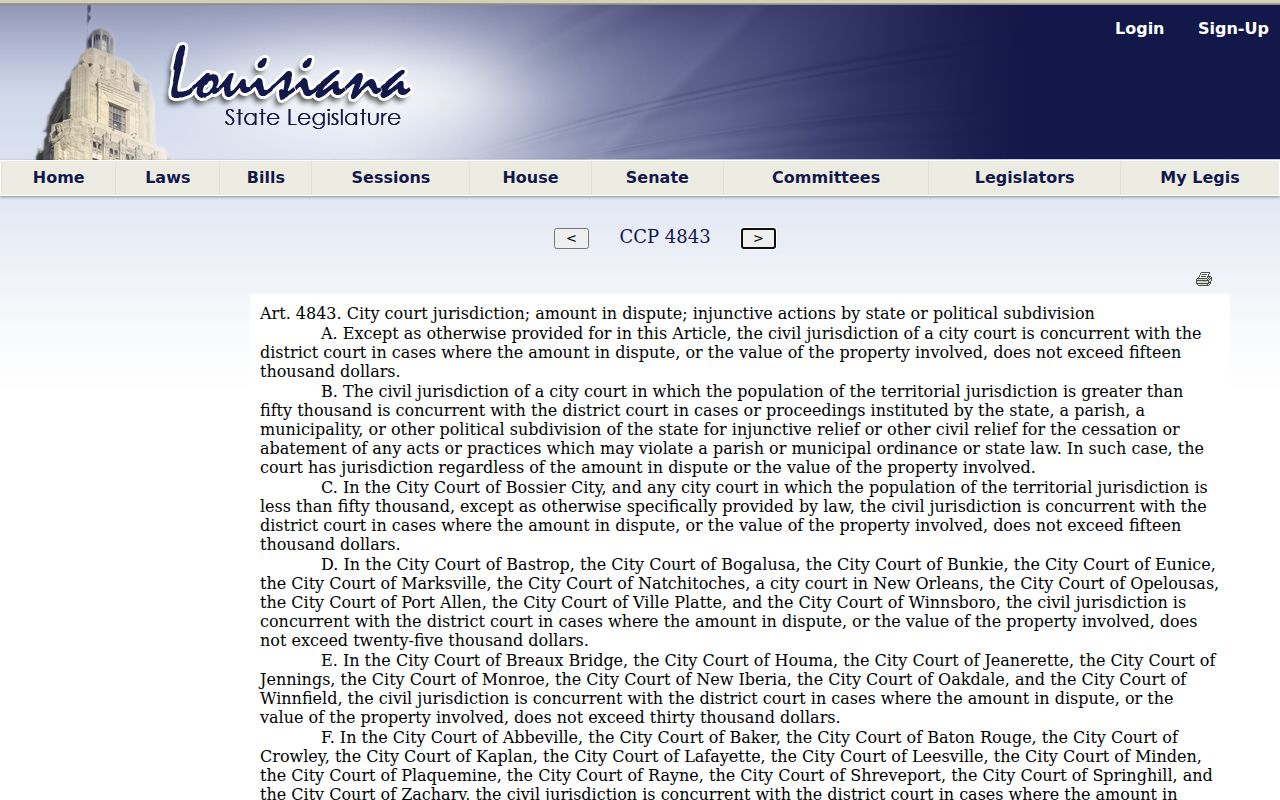
That statutory route matters for searchers. An Oakdale civil matter should be checked with its own court, not presumed to appear as a 33rd JDC ClerkConnect result. Civil suits, probate files, registry entries, lower-court appeals, Oakdale matters, and justice-of-the-peace cases in Allen Parish each need the venue-specific custodian.
Allen Parish Civil Rule 9.14 Settings
Local Civil Rule 9.14 governs motions and exceptions in Allen Parish. It also sets rule days, contested settings, and notice. Motions and exceptions get fixed for motion hour or a rule day. Contested civil cases are fixed by written motion with local certifications attached. Opposing parties get ten days to traverse after mailing. The clerk sends written notice. Pretrial statements are generally due seven working days before trial unless the judge orders otherwise.
None of that is a promise. A current order, the notice issued, and the latest minute entry control any particular Allen Parish civil docket setting. Read those first.
Motion hour, rule day, and contested settings shape civil scheduling here. So do written notice, pretrial statements, and court orders.
Hearings on the Civil Docket
Two free calendars cover settings in the parish. The Docket A and Docket B pages are static listings. A listing may show a date, time, courtroom or chambers entry, and a hearing label. Some entries add a case number and style. Civil bench trials, pretrial conferences, and motion settings all appear there. With a last name, use the official Court Events inquiry. It offers a second way to pull settings.
A setting only means an event is scheduled. It does not prove anyone attended, that the hearing happened, or that a judgment followed. An Allen Parish Docket A entry can lag behind reality. If an online calendar conflicts with your notice or the division you expect, call the Clerk or that division. Confirm the current setting rather than trusting the older entry.
Allen Parish Lower-Court Civil Routes
Not every civil matter lands on the 33rd JDC civil docket. Oakdale City Court keeps its own clerk and its own record channel. Justice of the Peace Courts in Wards 1 through 4 are limited forums. Each keeps its own custodian of records. For current Allen Ward listings and phone contacts, use the Louisiana Attorney General Justice Court Directory. It is the official source.
There is no single small-claims dollar limit shared by every Allen lower court. Check the venue printed on the petition or notice. Then contact that court directly for its record procedure. Federal cases tied to the parish sit outside ClerkConnect. They belong in the Western District of Louisiana's federal docket system. Searching Allen Parish Oakdale City Court, the JP wards, mayor's-court records, district civil dockets, and federal cases as one system will mislead you. Match the court first.
Who Can See Civil Dockets
Access to public civil records depends on limits. Those limits tie to each record type. Louisiana Code of Civil Procedure article 251 governs this. Under it, the clerk is the legal custodian of district-court records. The article lets you examine, copy, photograph, and order certified copies. Do so during the required open hours, subject to the rule and any applicable limits. The civil department treats adoption information as confidential and sealed.
Public-access rule: La. R.S. 44:31 supports inspection and copying of public records, while the Public Records Law does not override a sealing order, confidential adoption record, protective restriction, or other specific limit.
The official article 251 source is shown below.
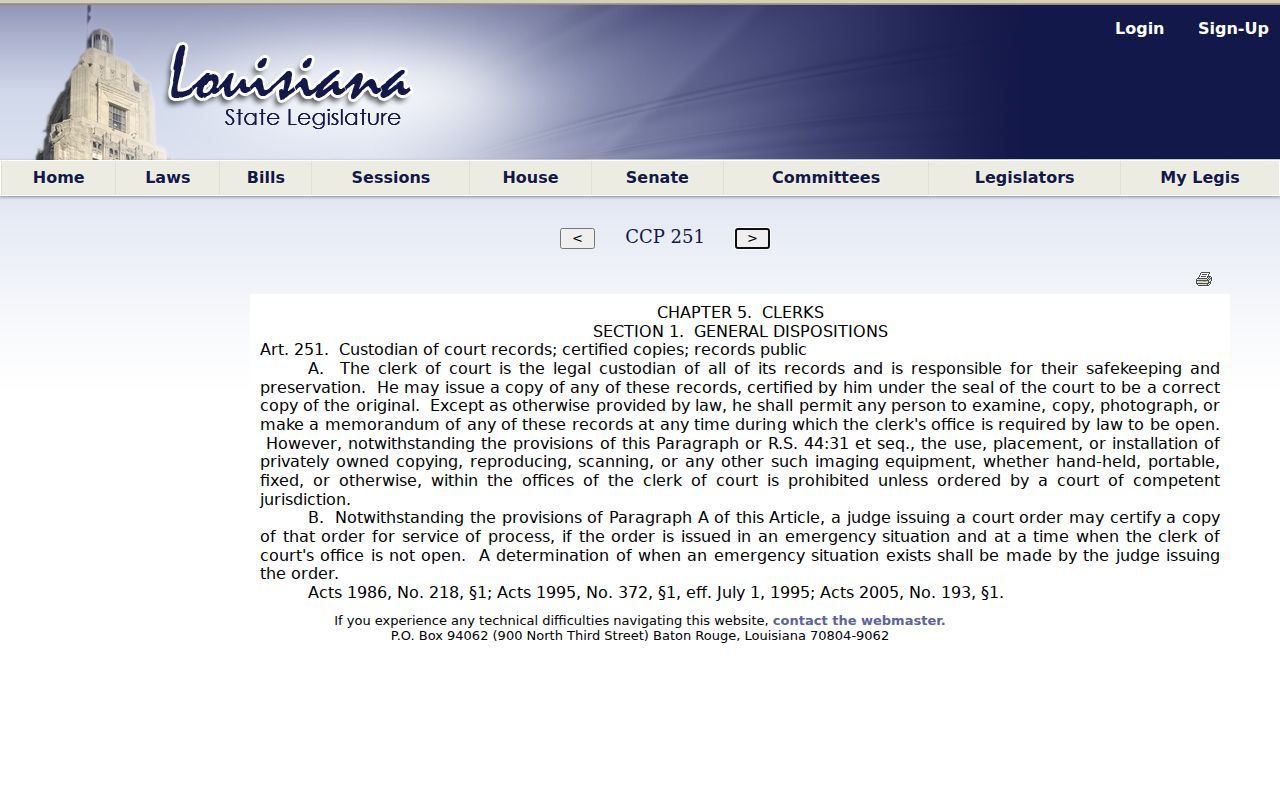
If the clerk turns you away, ask why. The answer usually falls into one of a few buckets. The file may be confidential or sealed. It may be in active use, or the office simply does not hold it. Sometimes the problem is just a search limitation. A Show Caption option on a screen does not turn a restricted filing into a public one.
Allen Parish civil dockets carry access limits. Those limits vary by record type. Adoption records, sealed exhibits, and files under protective restrictions are far more closed than ordinary public civil files. For those, Allen Parish clerk inspection rules and certified copy procedures apply.
Allen Parish Civil Docket Copies
A ClerkConnect result is not a file-stamped court copy. The lookup tells you the suit number, each party's role, the date filed, and the cause of suit. That is enough to frame a request. It is not enough to read the pleadings, exhibits, minutes, or certifications. For those, you need the Allen Parish civil department. It keeps the files, indexes, cost records, minute books, registry-money functions, and court process records listed in its official department information.
Ask the Allen Parish Clerk for copies. Keep the suit number in hand. Say which document or minute entry you want and the date range it falls in. Also specify the format: plain, certified, conformed, or file-stamped. The Clerk publishes no Allen form labeled for docket copies, certified court records, or public-record requests. A written letter or counter visit works instead. Contact channels vary. They run through the clerk counter, mail, phone, fax subject to confirmation, and a general email. One caution applies here. The mail address and the delivery address differ. Follow the routing instructions on the Clerk contact page before you send anything by courier.
The counter sits at 400 West Sixth Avenue, Oberlin. It is open 8:00 a.m. to 4:30 p.m. on weekdays, excluding holidays. Call (337) 639-4351 first if you can. U.S. mail goes to P.O. Box 248, Oberlin, LA 70655. FedEx and UPS must use the physical address. The general email is apinfo@centurytel.net. A fax charge does appear in the public fee data. That is not a promise that every civil-record request can be faxed. Ask before relying on it.
The Clerk has named no public terminal, public-records inbox, or request-tracking portal. Equipment can change. Ask at the counter what public access exists now. If the Clerk says a record is unavailable, press for the reason. The answer matters. A restriction, active use, non-possession, and a technical search limit are four different problems with four different fixes.
Fees fall into separate categories for copying, certification, and filing. No single flat price covers every court-document request in the public fee data. Confirm the current amount and your delivery method with the Clerk. Do this before paying. And do not pass off a ClerkConnect image or printout as certified. Only the custodian's certification